
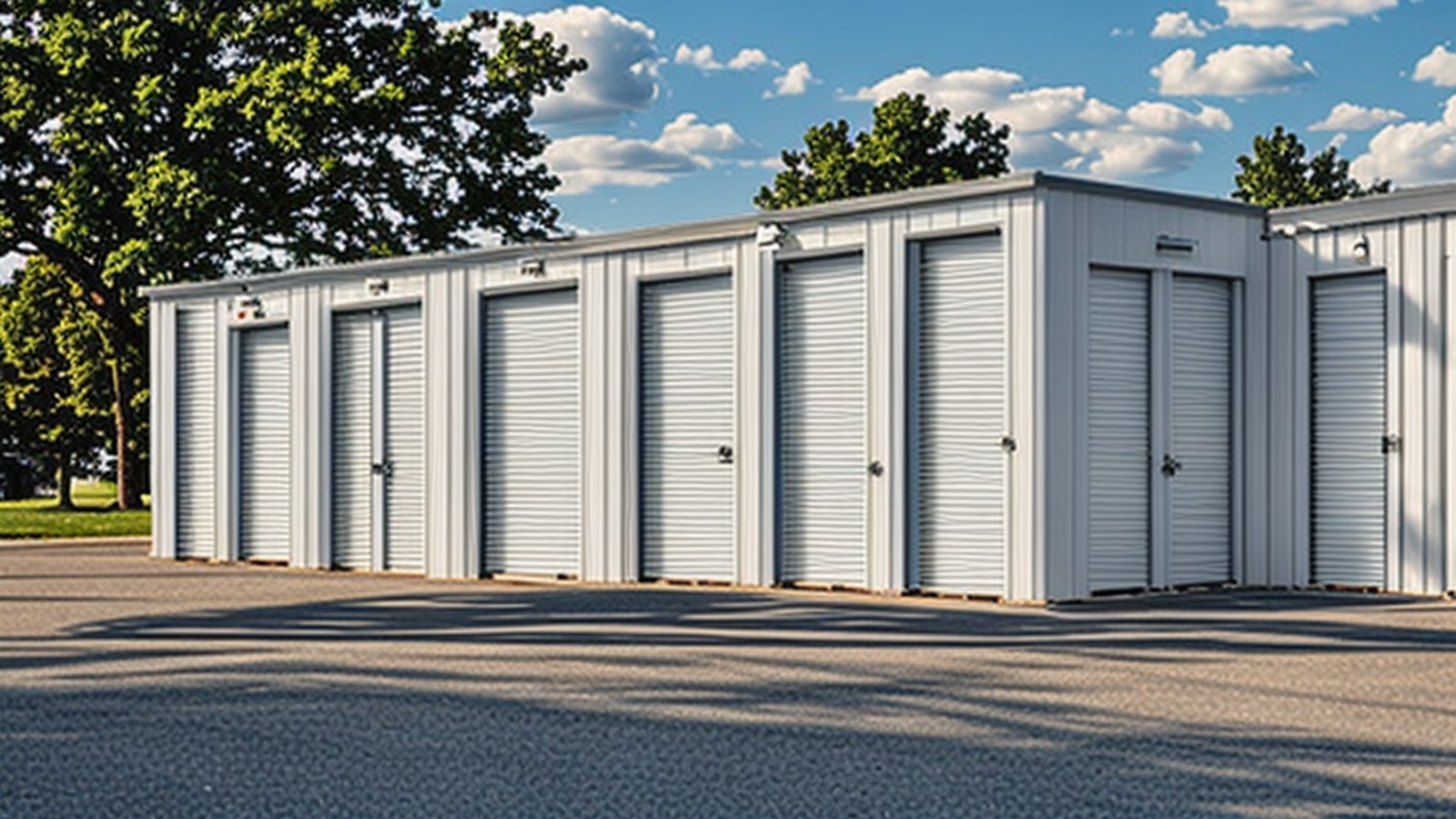
Life gets busy. A card expires, a paycheck lands a few days late, or a bill simply slips your mind. If you’re worried about a storage unit late payment, take a deep breath. Georgia law lays out clear steps before anything in a unit can be sold. Better yet, you get chances to fix things along the way. This plain-language guide explains what the law says. It also shows how autopay at Sid’s Self Storage in Pembroke helps you skip the stress.
Quick note: this article is general information, not legal advice. Your own rental agreement controls the details, so read it and ask questions.
What Georgia Law Says About a Storage Unit Late Payment
Georgia’s rules live in the Georgia Self-service Storage Facility Act of 2013, O.C.G.A. § 10-4-210 and the sections that follow. Under § 10-4-212, a facility owner has a lien on the personal property stored there. That lien covers rent, late fees, and certain other charges. In plain terms, if a storage unit late payment goes unresolved, a facility can eventually sell stored items. However, it can only do that after following set steps.
Those steps come from § 10-4-213. It spells out language a Georgia rental agreement must include. That language lets an owner enforce the lien without going to court.
When is storage rent considered late?
Under that required language, monthly rent is payable in advance, on or before the first of each month. If it isn’t paid by the seventh calendar day, the tenant is in default. A bounced check counts, too. In addition, once a tenant is in default, the owner may deny access to the unit until payment arrives.
The Georgia Storage Auction Timeline, Step by Step
A storage unit late payment does not mean an instant auction. Instead, the statute builds in waiting periods. Here’s the general order of events:
- The 1st: Rent is due.
- The 7th: If rent is still unpaid, the tenant is in default.
- 30 days of default: After a continuous 30 days in default, the owner may start enforcing the lien.
- Written notice: The owner notifies the tenant in person, by verified mail (such as certified mail), or by email.
- At least 14 days to pay: The notice must give the tenant at least 14 days after delivery to pay.
- Advertisement: If the balance is still unpaid, the owner advertises the sale.
- The sale: The public sale can happen no sooner than 15 days after the ad is published.
What the notice has to include
The notice must include an itemized statement of what’s owed and when it became due. It must also say access is denied and list a name, address, email, and phone number to contact. Meanwhile, an emailed notice may get no personal reply or delivery receipt. In that case, the owner must also send it by verified mail before the sale. That’s one more reason to keep your contact info current.
A recent change worth knowing
You may read older guidance saying the sale ad must run for two consecutive weeks. However, a 2025 update to § 10-4-213 changed that to a single ad in the county’s legal organ. For most household goods, the ad can run in another commercially reasonable way instead. The law also allows the sale on a public online auction website. Together, these minimum waiting periods still add up to roughly two months.

You Can Still Fix a Storage Unit Late Payment Before a Sale
Here’s the most important part. Under § 10-4-213, a tenant may pay what’s owed, plus reasonable expenses, any time before the sale. That redeems the belongings. Georgia’s Consumer Ed, from the Attorney General’s Consumer Protection Division, says the same thing.
So if a storage unit late payment happens, act early:
- Pay as soon as you can. The sooner you catch up, the fewer fees and headaches you’ll face.
- Reach out. A quick call or email beats silence, every time.
- Watch your inbox and mailbox. Notices can arrive by email or verified mail.
- Read your rental agreement. Late fees and due dates are set there, so check yours.
If you’ve fallen behind, don’t wait for a notice. Instead, reach out to us right away.
How Storage Unit Autopay Keeps You Covered
The easiest way to avoid a storage unit late payment? Never miss a due date in the first place. Sid’s Self Storage offers online bill pay and autopay through the Login/Paybill link at the top of our website. Our FAQ notes that you can manage payments online at any time.
With storage unit autopay turned on, rent goes out on schedule. Therefore, there’s no due date to remember and no stamp to find. To keep it running smoothly:
- Update your card before it expires. An expired card can stop autopay cold.
- Keep your email and address current. That way, receipts and any notices reach you.
- Check your statement now and then. A quick look confirms each payment went through.
Pick a unit that fits your budget
Every unit at Sid’s rents month-to-month with no long-term contract. So you only keep the space for as long as you need it. A 5×10 holds boxes and seasonal gear. A 10×10 fits a couple of rooms, and a 10×20 handles a whole-house move. For more renter tips, see our self storage questions guide and our storage unit etiquette rules.
Frequently Asked Questions
When does a storage unit late payment become a default in Georgia?
Under the lease language in § 10-4-213, rent unpaid by the seventh calendar day of the month is in default. A dishonored check also puts a tenant in default.
Can a Georgia storage facility lock me out?
Yes. Once a tenant is in default, the owner may deny access to the unit until payment is received.
How will I be told before a sale?
First, after 30 days of continuous default, the owner sends written notice in person, by verified mail, or by email. Then the tenant gets at least 14 days after delivery to pay.
Can I get my belongings back after a sale is advertised?
Yes, as long as the sale hasn’t happened yet. You can pay the amount owed plus reasonable expenses any time before the sale.
Does Sid’s Self Storage offer autopay?
Yes. Sid’s offers online bill pay and autopay. You can also reach us through our contact page.
Stay Covered With Sid’s Self Storage in Pembroke
Sid’s Self Storage, formerly Bacon’s Self Storage, is locally owned and sits at 102 W Industrial Blvd in Pembroke. Our Pembroke self storage offers drive-up units, 24/7 gated access, online bill pay, and autopay. In short, a storage unit late payment is one less thing to worry about here.
Rent online now in about five minutes, and use promo code MOVEINNOW for your first month. Have questions about your account? Contact us or call (912) 574-4473.
Sources: Justia, Georgia Code § 10-4-210, “Short title” (Georgia Self-service Storage Facility Act of 2013), https://law.justia.com/codes/georgia/title-10/chapter-4/article-5/section-10-4-210/ ; Justia, Georgia Code § 10-4-212, “Lien of owner of self-service storage facility,” https://law.justia.com/codes/georgia/title-10/chapter-4/article-5/section-10-4-212/ ; Justia, Georgia Code § 10-4-213, “Enforcement of lien without judicial intervention” (effective July 1, 2026), https://law.justia.com/codes/georgia/title-10/chapter-4/article-5/section-10-4-213/ ; Georgia Attorney General’s Consumer Protection Division, Consumer Ed, “Storage Unit Belongings to be Sold at Auction” (updated Dec. 11, 2018), https://consumered.georgia.gov/ask-ed/2010-12-08/storage-unit-belongings-be-sold-auction
